Scene and composition
About the kitten, flowers, and butterflies
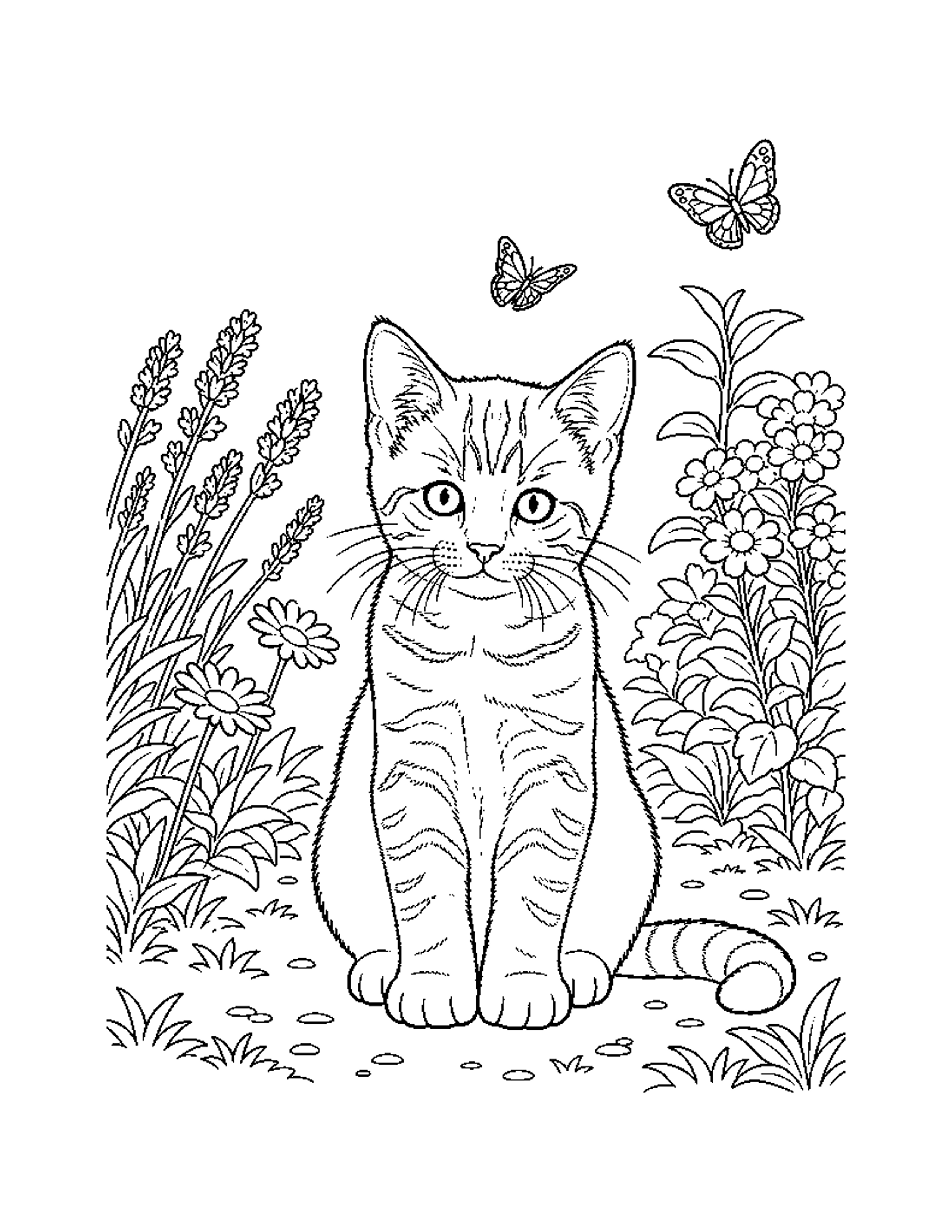
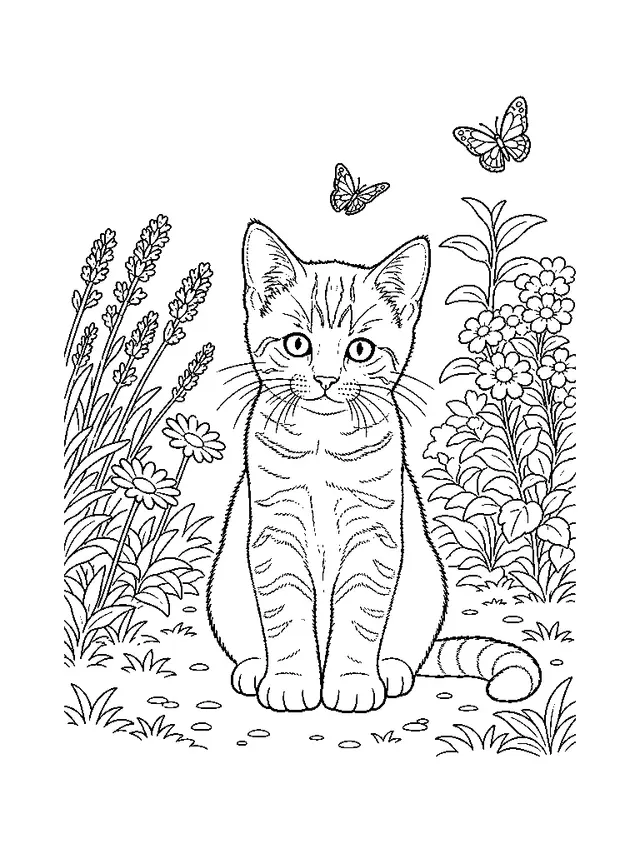
This printable shows a young kitten sitting upright in a small garden, framed by flowers and two butterflies. The clear central pose, generous white space, and mostly closed shapes make the page easy to scan before a child begins coloring.
Page details / What you'll color
The kitten faces forward in a calm seated pose, with both front paws placed together near the center of the page. Its rounded head, pointed ears, large eyes, small nose, short whiskers, striped legs, and curved tail create one complete subject without a second animal competing for attention. The cat occupies most of the vertical composition, so the face and body remain the first things a child notices.
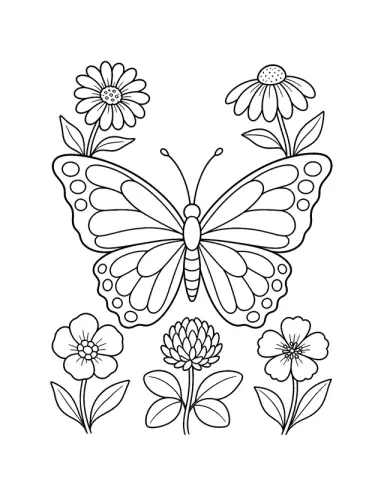
On the left, several tall lavender-like flower stems rise beside shorter daisy-shaped blooms and leafy plants. On the right, a fuller group of rounded flowers and leaves forms a second garden edge. These two plant groups frame the kitten instead of covering it, while the open white background keeps the page from feeling crowded. Exactly two butterflies appear above the kitten. Their wings are separated into small but readable sections, giving children a little extra detail after they finish the larger cat and flower areas.
The outer silhouette is strong, and many of the main regions are large and closed: the kitten's head, ears, chest, paws, body, tail, flower petals, leaves, and butterfly wings. Finer lines appear inside the fur, faces of the flowers, and butterfly patterns, but they do not fill the whole page. This balance makes the picture approachable for younger colorers while still providing enough detail to hold their attention.
Color ideas and techniques
Color ideas and techniques
One color approach uses a ginger-orange kitten with a cream chest and cream paws. Soft orange pencil strokes can follow the direction of the fur, while slightly deeper orange lines define the forehead, legs, and tail stripes. A pale pink can be used inside the ears and around the nose, and the eyes can stay bright with green or yellow-green irises.
For the garden, try lavender purple on the tall flowers at the left and pink with white accents on the rounded flowers at the right. Medium and light greens can separate stems, leaves, and low plants without making every green area identical. The two butterflies can be orange so they echo the kitten, with darker brown or charcoal marks around the wing edges. Leaving parts of the background white preserves the airy printable look and keeps the subject clear.
Colored pencils work well for the smaller fur and wing details because they allow light layered strokes. Crayons are a good fit for the broad chest, paws, petals, and leaves. If markers are used, test them on a spare sheet first and place another page underneath the printable. Children can also combine tools: crayons for the largest closed shapes, colored pencils for fur stripes and butterfly markings, and a darker pencil to strengthen a few outlines after coloring.
Audience and coloring order
Difficulty and who it's for
This page is rated Simple and is designed mainly for ages 3–6. The kitten is large, centered, and easy to recognize, and the page offers many broad areas that work well with chunky crayons. Younger children can focus only on the kitten and the largest flowers, while older children can spend more time on the leaves, fur stripes, flower centers, and butterfly wings.
The page works especially well for a short home activity, a classroom animal theme, or a quiet coloring break. An adult can help by naming the main sections before coloring begins: kitten, left flowers, right flowers, and two butterflies. That simple scan gives a young child a clear plan without turning the page into a lesson or adding extra instructions to the printable itself.
A simple coloring order
Start with the kitten because it is the largest and most visually important part of the scene. Color the face and body first, then add the chest, paws, stripes, eyes, inner ears, and tail. Next move to the left-side flowers and leaves, followed by the fuller group of flowers and foliage on the right. Finish with the two butterflies and any small flower centers or ground details. This order moves from the biggest closed regions to the smallest ones, so the page shows visible progress early and remains manageable through the final details.