Piano Scene and Structure
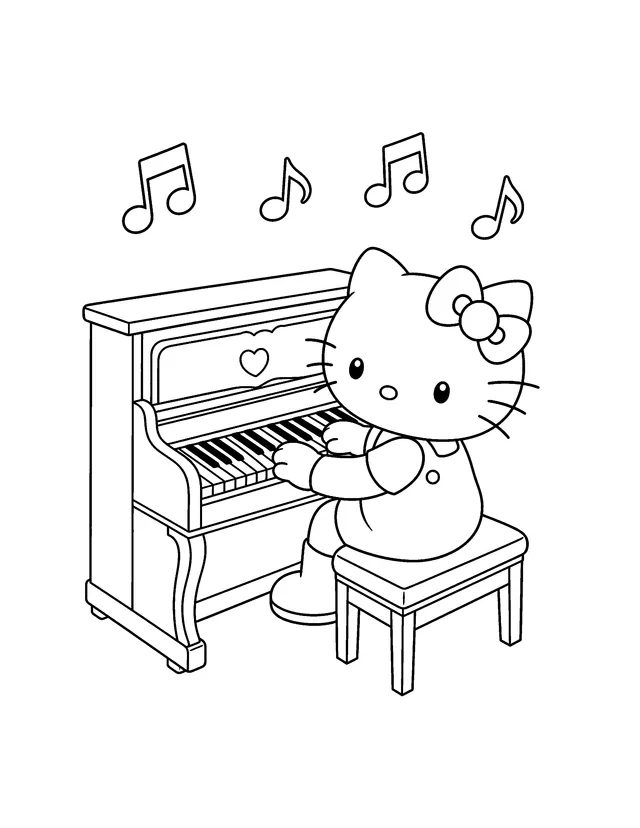
Hello Kitty Playing an Upright Piano
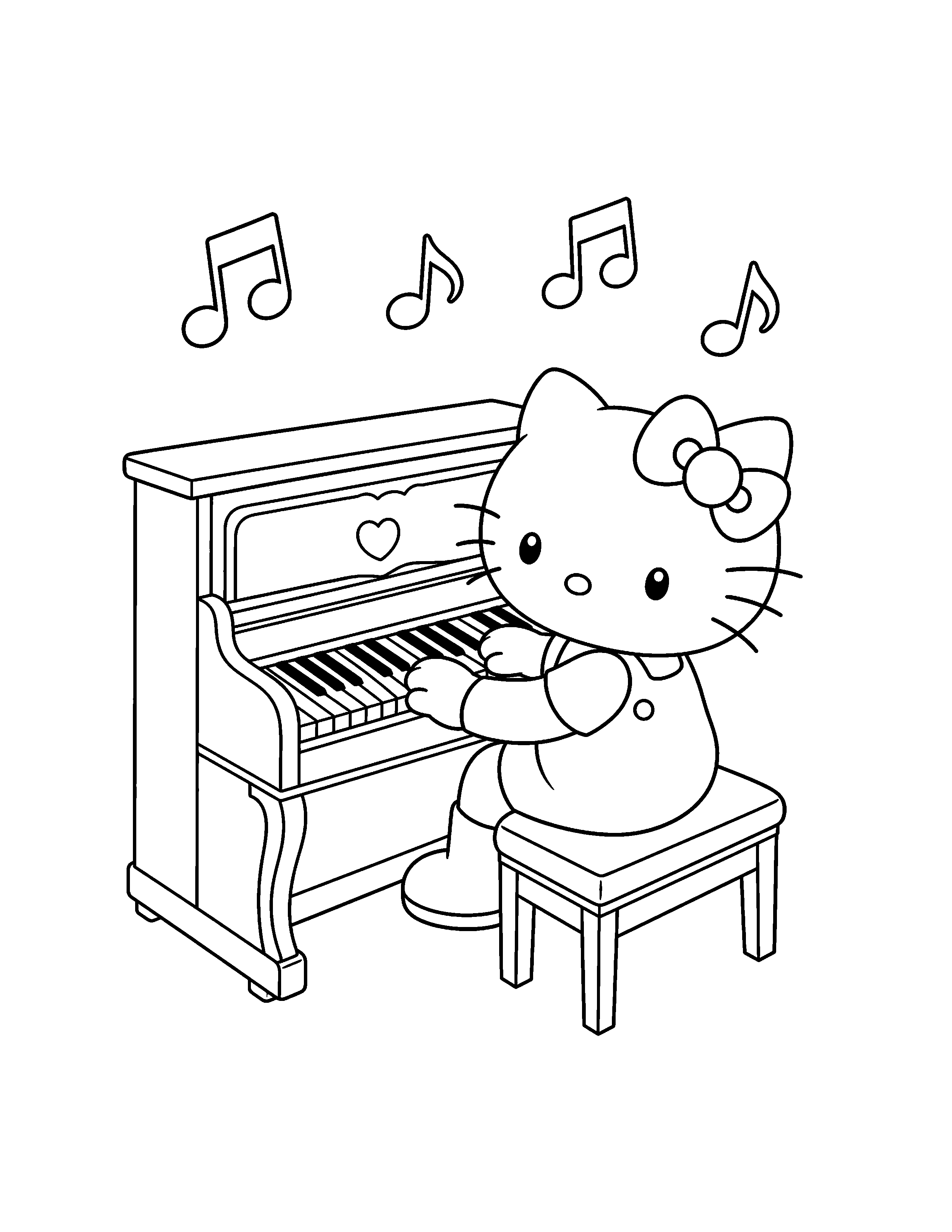
This printable shows Hello Kitty seated on a rectangular padded bench at one small upright piano. The piano fills the left half of the page, while the character sits on the right and reaches both paws across separate groups of keys. Four music notes float in the open space above them, making the playing action clear without adding another character or setting.
The face, ear bow, clothing, large heart-shaped chest panel, and shoes keep the character easy to identify beside the instrument. A smaller heart decorates the piano front panel. These two heart shapes sit in different parts of the composition, so they can repeat one color or act as separate accents.
Before coloring, trace the main visual path from the piano lid down to its keyboard, across both paws, and then to the character's face and bow. The bench anchors the lower right, while the four notes balance the large instrument with smaller marks in the otherwise blank upper background.
Piano, Keyboard, and Bench Details
The upright piano has a broad top lid, a framed front panel, a readable keyboard, a lower cabinet, curved side supports, and small feet. Its cabinet creates the largest connected group of coloring regions on the page. The small heart above the keys gives the broad front panel one centered decorative detail.
The keyboard is built from many narrow repeated keys, and both paws overlap it from the right. Coloring alternate key groups can help preserve the keyboard rhythm without counting or naming individual notes. A sharpened pencil offers more control near the paw outlines and the short boundaries between neighboring keys.
The bench uses a wide cushion, a narrow base, and three unobscured straight legs. Its simple geometry contrasts with the piano's curved side supports and the character's rounded outline. Keeping the bench lighter or darker than the piano can separate the seated figure from the two pieces of furniture where their outlines meet.
Color Choices and Order
Color Ideas for the Character and Piano
For a warm palette, try a cherry-red bow and chest heart, cream or pale yellow clothing, and a honey-brown piano. A deeper brown on the cabinet edges can distinguish the lid, front panel, supports, and lower body while keeping the small heart above the keys visible.
A cooler option can pair a blue or violet bow with a soft teal piano and a lavender bench cushion. Repeat one accent color in the chest heart, piano heart, and two of the floating notes, then use a neighboring hue for the other notes so all four remain separate.
Keep the strongest colors away from every small boundary at once. Broad color can fill the piano cabinet, bow loops, clothing, heart panel, bench cushion, and shoes. Lighter pressure works better around the face, paws, narrow keys, bench edges, and note interiors, where the black contours need to remain easy to follow.
A Keyboard-First Coloring Order
Begin with the keyboard and both paws because they explain the action and contain the narrowest repeated boundaries. Work across a few keys at a time, pause at each paw, and keep the outline between hand and keyboard visible. Completing this central bridge first makes the rest of the page easier to divide.
Next color the large piano cabinet from top to bottom, separating the lid, front panel, small heart, lower cabinet, curved supports, and feet. Move to the bench cushion and legs, then complete the character's bow, clothing, chest heart, shoes, face, and whiskers on the right.
Finish with the four floating notes. They are isolated from the main outlines and can reuse colors from the character, piano, or bench without crowding the central scene. Leaving the surrounding white paper untouched preserves the open spacing and keeps the seated playing pose as the main focus.
Difficulty and Control
Detailed Keyboard Practice for Ages 7–12
The approved Detailed · Ages 7–12 label matches the page's mix of broad shapes and controlled repeated details. The head, bow loops, clothing, piano cabinet, bench cushion, and shoes offer large regions, while the keyboard, paws, whiskers, facial features, bench edges, and note interiors ask for slower strokes.
Colored pencils can handle the narrow keys and overlaps, while crayons can cover the larger cabinet and clothing areas. If markers are chosen, test them on another sheet and place spare paper beneath the printable. Tool choice is optional; the important task is keeping adjacent key and paw boundaries readable.
For a shorter session, finish the character, keyboard, and four notes first, then return to the piano cabinet and bench. For a fuller finish, add gentle light-to-dark variation inside the broad wood panels and cushion while preserving every clean black contour and the blank background around the notes.